Sleep science & materials
Dunlop Latex Explained: How This Natural Material Is Made and Feels
Resilient, buoyant and quietly distinctive, Dunlop latex has a feel all its own. Here is how the material is made, what its construction can mean for comfort, and what to look for when comparing latex in an organic sleep system.
Published October 17, 2026
There are materials that invite you to sink in, and materials that seem to meet you halfway. Dunlop latex belongs to the latter camp. Press into it and the surface yields; release your hand and it springs back with an unmistakable sense of buoyancy. In a mattress, that responsive quality can feel supportive without being rigid, and cushioning without the slow, enveloping sensation some sleepers associate with memory foam.
The name describes a manufacturing method rather than a particular mattress design or guaranteed comfort level. Dunlop latex may appear as a single layer, a multi-layer core, or one component in a larger construction alongside cotton, wool, coils or other materials. Understanding how it is produced is a useful first step, but the finished feel depends on far more than the word on a product label: firmness, layer thickness, mattress cover, support underneath and the sleeper’s own preferences all matter.
For readers exploring natural latex and organic sleep products, the most helpful approach is measured curiosity. Learn what the material is, ask how it was processed, check what certifications actually cover, and assess the whole sleep system rather than relying on a single appealing adjective.
What is Dunlop latex?
Latex is the milky fluid obtained from certain plants. In commercial natural rubber production, it is commonly associated with the rubber tree, Hevea brasiliensis. To make latex foam, liquid latex is processed, shaped and cured into a resilient cellular material. The resulting foam can be used in mattresses, pillows and other products that call for a flexible, springy structure.
“Dunlop” refers to a longstanding process for turning latex into foam. The method is often compared with Talalay, another latex-foam process. Both can produce latex layers, but they use different production steps and may result in foams with different characteristics. Neither name, by itself, tells you whether a mattress will feel comfortable, last a particular number of years, or suit a specific body. Those are questions of formulation, construction, quality control and fit.
It is also worth separating “natural latex” from “organic latex.” Natural latex indicates that the foam is made, at least in part, from latex derived from natural sources; products may also contain other ingredients. Organic claims are more specific and should be supported by a relevant certification that identifies what has been assessed. Read the scope of the certificate: it may apply to the latex material, a particular component, or a broader set of product inputs and manufacturing practices. A label is most useful when it is verifiable and clearly described.
From liquid latex to a finished layer
Dunlop production begins with latex that is prepared for foaming. The latex is whipped or otherwise aerated, then placed into a mold. During this stage, the material is distributed through the mold and processed so it can form a cohesive foam. It is then heated to cure, allowing the structure to set. After curing, the foam is removed, washed and dried before it is inspected and cut to size.
The steps may sound straightforward, but the finished foam depends on careful control of the formulation and process. Latex must be transformed into a stable network of interconnected cells, and the manufacturer must manage curing and washing consistently. The shape and dimensions of the mold, the foam’s density and firmness, and subsequent finishing all help determine the characteristics of the final layer.
Some descriptions of the Dunlop process mention that the mixture can settle in the mold before curing. This may contribute to variations in density through the material. It is sometimes simplified into the claim that Dunlop is always firmer or denser at the bottom, but product construction can vary, and broad generalizations do not replace technical specifications. If a brand makes a statement about a particular layer’s density, firmness or composition, look for product-specific details rather than assuming every Dunlop foam behaves identically.
Once ready, a latex layer can be used in different ways. A mattress might have a firm latex core and a softer comfort layer, or it may use one latex layer with a quilted textile cover. Some designs place latex above an innerspring unit. The word “Dunlop” tells you something important about the foam’s processing route, but it does not describe the complete mattress architecture.
The feel: buoyant, responsive and adaptable
Many people describe Dunlop latex as springy or buoyant. Compared with a slow-response foam, it tends to regain its shape promptly after pressure is removed. The surface can contour around the body while still feeling lively beneath it. That combination is part of its appeal: the sleeper may experience some cushioning at pressure points without feeling as though movement is being swallowed by the mattress.
“Supportive” is not the same as “firm,” and a responsive feel is not automatically right for everyone. A softer latex layer may allow more immersion at the shoulder and hip; a firmer layer may feel more level and resistant. How that translates in practice depends on body shape, sleeping position, weight distribution, personal sensitivity and the materials above and below the latex. Even the same layer may feel different when paired with a stretch-knit cover than when enclosed in a more structured quilted top.
Latex’s resilience can make it easier to change position than a material with a slower recovery. Some sleepers appreciate that ease of movement; others prefer a more settling, enveloping surface. Partners may also notice how movement travels across a bed. Latex itself does not determine motion isolation in isolation: mattress thickness, construction, foundation and the presence of coils can all influence how movement is felt on the other side.
Temperature is another frequently discussed part of the latex experience. Latex foam has a cellular structure, and mattress designs may include perforations or other features intended to support airflow. But there is no simple promise that any latex mattress will sleep cool. Heat retention can be affected by the cover, quilt fill, sheets, room conditions and a person’s own comfort needs. Wool and cotton, for example, contribute different qualities when used in the surrounding layers, but the overall result is a system rather than one material acting alone.
Dunlop and Talalay: a practical comparison
Dunlop and Talalay are distinct methods of producing latex foam. In broad terms, Dunlop foam is poured into a mold and cured, while the Talalay process includes additional steps that involve filling the mold more completely, using a vacuum and freezing the material before vulcanization. The details are manufacturer-dependent, but these process differences can influence the structure and feel of the finished foam.
Shoppers often encounter shorthand saying Dunlop feels denser or more grounded while Talalay feels lighter or more buoyant. These descriptions can be useful as a starting point, not as a rule. Firmness options, formulation and the way the layer is used make a substantial difference. One brand’s medium Dunlop layer should not be assumed to match another’s, nor should a process name be treated as a complete measure of quality.
- Ask about the layer: Is it a comfort layer, a support core, or both?
- Compare specifications: Look for the stated firmness, thickness and material composition when available.
- Consider the whole build: A mattress cover and other layers can change how the latex feels.
- Test, if possible: A label cannot tell you whether the surface suits your preferred sleep position.
The most useful comparison is not “Which process is best?” but “Which construction feels appropriate to me, and can the maker explain what is in it?” Both Dunlop and Talalay latex can be used in thoughtfully designed products. The right choice is a matter of fit, verified material details and a clear understanding of what the mattress is designed to do.
Reading organic and natural claims with care
Interest in organic sleep products often begins with a desire to understand materials more clearly. That is a reasonable goal, but terms such as “natural,” “organic,” “clean” and “eco-friendly” are not interchangeable. They can refer to different ingredients, production standards or environmental attributes, and they do not automatically establish that a product is safer, healthier or more comfortable for every individual.
Certifications can help by providing an independent framework for assessing defined criteria. For latex, shoppers may encounter GOLS, which is associated with organic latex products. A mattress can also include textiles certified under separate standards, such as organic cotton or wool. Check which specific component is certified, whether the certificate is current, and whether the finished product’s description explains the materials and construction plainly. The existence of one certification does not mean that every component of a mattress has been assessed under the same standard.
Ask what is in the complete mattress, not only in its latex layer. Covers, quilting, adhesives, fire barriers and other elements contribute to the finished product. If you have a known allergy, sensitivity or medical concern, consult an appropriate health professional and request precise product information from the manufacturer. Marketing language is not a substitute for individualized medical advice, and no mattress material should be presented as a treatment for a health condition.
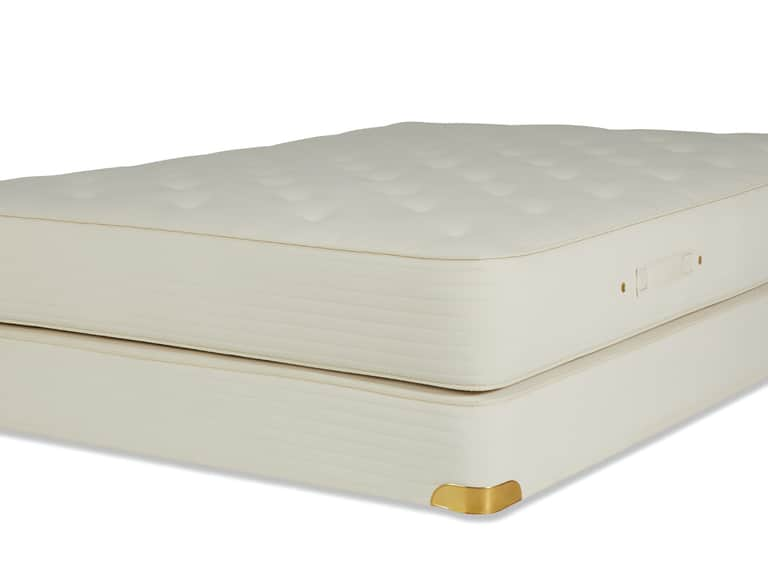
For a concrete example of how these components can be described, the Naturally Organic Hudson Latex Mattress is presented as an eight-inch mattress with two Dunlop latex layers: a five-inch firm core and a three-inch medium layer. Its listed construction also includes GOTS-certified organic cotton and wool. These details illustrate why it is useful to examine the full build rather than evaluating a mattress by latex type alone. Product specifications can change, so confirm current materials, certifications and terms directly before making a decision.
How to assess comfort before choosing
A mattress should be judged in the context of the person who will use it. Start with your usual sleep position, but treat it as a clue rather than a formula. Side sleepers may look for enough cushioning around the shoulder and hip to feel comfortable; back sleepers may prefer a surface that feels evenly supportive; stomach sleepers often pay close attention to how much the midsection sinks. Individual bodies and preferences differ, so these observations are prompts for testing rather than universal prescriptions.
Consider whether you prefer a quick, buoyant response or a slower, more contouring sensation. Think about how easily you want to turn over, whether you share the bed, and what you currently find uncomfortable. If possible, spend enough time on a trial surface to notice pressure, alignment and ease of movement. A brief showroom impression may not reveal everything, while at-home trial terms vary and deserve careful reading.
Support also depends on the base. A latex mattress needs an appropriate, level foundation that meets the maker’s requirements. Slats that are too widely spaced, an unsuitable frame or an uneven surface can affect how a mattress performs and may influence warranty eligibility. Check the manufacturer’s guidance for the exact model, including requirements for adjustable bases and platform beds.
Care, longevity and everyday use
Latex is often chosen for its resilient character, but durability is not guaranteed by the material name alone. Foam formulation, density, construction, the sleeper’s use and the quality of the surrounding components all matter. A warranty can offer useful information about a maker’s stated coverage, but it is not a prediction of precisely how long a mattress will feel new. Review what is covered, what counts as an eligible defect, and what conditions apply.
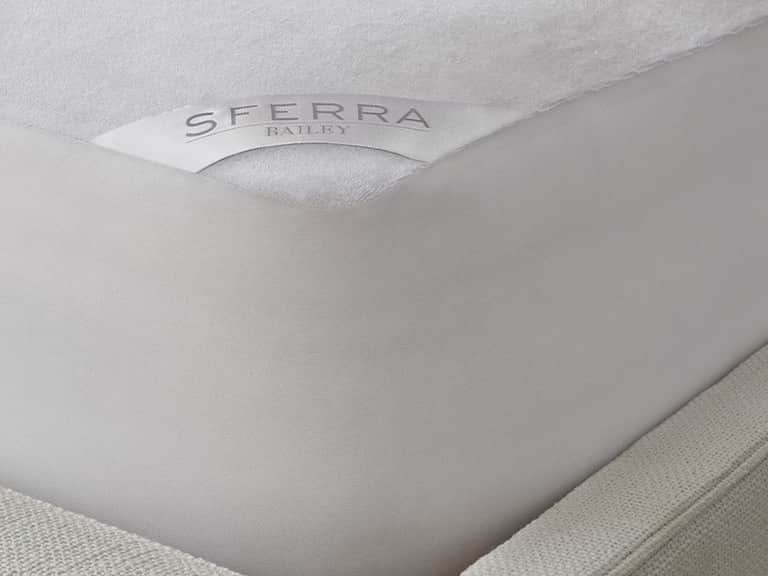
Follow the care instructions supplied with the mattress. Some latex mattresses have covers that are not designed to be removed or machine washed; spot cleaning may be the only recommended approach. Avoid exposing latex to excessive moisture or harsh cleaning products unless the manufacturer explicitly approves them. A breathable, well-fitting protector can help guard against spills and everyday soiling, while regular laundering of sheets keeps the immediate sleep surface fresh.
Mattress rotation instructions vary. Some mattresses are designed with a specific top and bottom and should not be flipped, while others may be rotated periodically. Use the maker’s guidance rather than assuming that all latex beds should be treated the same way. Keep the room and foundation dry, and check the bed frame periodically for stability and proper support.
A considered choice, not a trend-driven one
Dunlop latex has a compelling material story: a plant-derived starting point transformed into a durable-feeling, responsive foam through a defined manufacturing process. Its appeal is not only in the word “natural,” but in the way it can combine contouring with quick recovery. For some sleepers, that offers a satisfying middle ground between plushness and pushback. For others, a different feel or construction may be more comfortable.
When comparing latex materials, keep the questions specific. Is the foam natural, blended or synthetic? What does the certification cover? How thick are the layers, and what role does each play? What textiles and other materials surround them? How does the mattress feel when you lie in your usual position, and what support does the manufacturer require underneath? These questions turn an appealing label into useful information.
Good sleep design is rarely about one material performing a miracle. It is about a considered combination of surface comfort, underlying support, breathable bedding and an environment that suits the sleeper. Dunlop latex can be an elegant part of that equation—resilient, adaptable and refreshingly direct in its response—but the best choice is ultimately the one whose materials are transparent and whose feel works for you.